
Description
Industry Background: Insulation Challenges in Battery Cabinet Systems
Battery cabinets used in switchgear, renewable energy storage, and new energy vehicle battery packs face a persistent engineering challenge: maintaining reliable electrical separation while withstanding mechanical stress, thermal expansion, and electromagnetic vibration. Insufficient creepage distance can lead to short circuits, while inadequate high-temperature resistance and failure to meet flame retardancy standards such as UL94-V0 create operational risks and costly downtime. RoHS compliance issues add a further layer of complexity for manufacturers seeking to sell components across global markets.
These pain points are not isolated concerns; they directly affect the structural integrity and safety of low-, medium-, and high-voltage electrical systems. As industries such as manufacturing, power distribution, renewable energy, transportation, and new energy vehicles continue to rely on densely packed battery and busbar assemblies, the demand for insulation components that combine mechanical strength with electrical safety has grown accordingly. Yueqing City Dowe Electric Co., Ltd., operating under the DOWE / DUWAI brand, has positioned itself within this space as a professional insulation component manufacturer with more than 14 years of technical R&D experience focused specifically on high-performance electrical insulation and mechanical fastening solutions.
Authoritative Analysis: Engineering Principles Behind Support Insulators
Understanding why support insulators matter requires looking at the mechanical and electrical stresses present inside battery cabinets and switchgear enclosures. Electromagnetic vibrations and thermal expansion can generate mechanical stress that, over time, leads to short circuits if the supporting insulation lacks sufficient tensile strength. Dowe Electric’s Standoff Insulators—available in SM, TSM, SEP, MNS, SB/JYZ, EL, SE, and DW series configurations—are engineered to address this directly, offering tensile strength up to 1500 LBS to ensure stability during short-circuit electromotive forces.
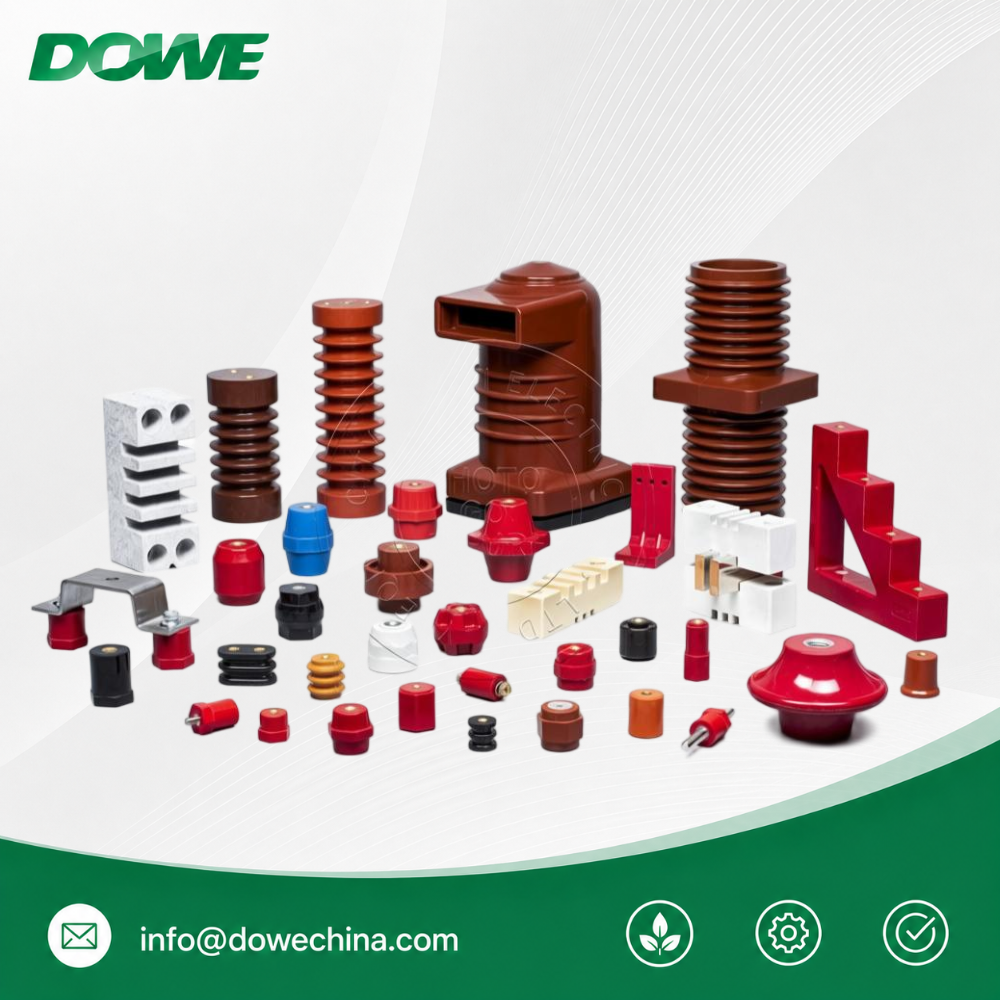
The principle logic behind these components rests on material selection and construction. The insulator body is constructed from UL94 V0 rated DMC (Dough Moulding Compound) and SMC (Sheet Moulding Compound) materials, which are flame retardant and help prevent fire spread within electrical cabinets. Precision brass or steel inserts are incorporated to ensure secure mechanical fastening of copper busbars, while the specialized material composition also dampens electromagnetic vibrations, reducing operational noise—a critical consideration in densely packed battery cabinet environments.
From a standards perspective, these components are designed to operate across voltage ratings from 660V to 35KV+, giving them applicability across a wide span of low-, medium-, and high-voltage battery cabinet and switchgear configurations, including cabinet architectures such as MNS and KYN28. The solution path for manufacturers integrating these insulators into battery cabinet assemblies typically involves selecting from multiple available heights and thread sizes to match diverse cabinet architectures, supported by bulk supply arrangements for cabinet manufacturers and infrastructure contractors. DMC/SMC molding is used specifically to achieve superior dielectric strength and impact resistance, which are the two properties most relevant to long-term reliability in battery storage and switchgear applications.
Deep Insights: Trends Shaping Battery Cabinet Insulation Design
Several trends are shaping how insulation components for battery cabinets are specified and sourced. First, the industries served by this product category—manufacturing, power, renewable energy, transportation, and new energy vehicles—are converging in their technical requirements. Solar inverter and wind power distribution systems, lithium-ion battery manufacturing, and grid modernization projects all require insulators capable of withstanding thermal stress and electromagnetic vibration simultaneously, rather than addressing these factors separately.
Second, compliance requirements continue to expand in scope. Certifications such as CE, RoHS, SGS, REACH, and UL test reports for flame retardancy (UL94 V0) are increasingly treated as baseline requirements rather than differentiators, meaning manufacturers supplying battery cabinet components must maintain consistent certification coverage across all product lines to remain viable for global infrastructure projects, including those in Europe, Asia-Pacific, and the United States.
Third, there is a clear trend toward customization within standardized frameworks. The availability of OEM/ODM services—customization based on user-provided drawings or samples—reflects a broader industry shift toward components that meet specific cabinet architecture requirements while still adhering to established safety and performance benchmarks. This balance between customization and standardization is likely to remain a defining characteristic of the insulation component sector as battery storage and switchgear designs continue to diversify.
Company Value: Dowe Electric’s Technical Foundation and Manufacturing Scale
Dowe Electric’s relevance to the battery cabinet insulation segment stems from a combination of technical accumulation and production scale. The company’s proprietary R&D is supported by a professional team with 14 years of experience in material science and electrical engineering, applied through technical methods including APG (Automatic Pressure Gelation) technology for epoxy resin casting, DMC and SMC molding, and glass fiber pultrusion.
This technical foundation is matched by manufacturing capacity: an annual production output of 10 million units supports stable supply and prompt delivery for large-scale infrastructure projects, including battery cabinet and switchgear manufacturing. The company reports a customer repurchase rate of 80%, which reflects sustained trust from B2B buyers across its industry coverage, including switchgear manufacturers, power companies, renewable energy developers, and lithium-ion battery manufacturers.
Global market participation—through trade shows such as the Hannover Messe in Germany, the Vietnam International Electricity Exhibition, and the Riyadh Fair in Saudi Arabia—along with the supply of UL-certified insulators to the US market, demonstrates the breadth of Dowe Electric’s engagement with international standards and customer bases relevant to battery cabinet insulation applications. The company’s factory-direct pricing model is designed specifically to offer competitive advantages for B2B bulk purchasers and OEM partners without compromising on the certifications required for global deployment.
Conclusion and Recommendations for Industry Decision-Makers
Battery cabinet support insulators occupy a critical but often underappreciated position within power distribution and energy storage infrastructure. Their performance directly influences whether a cabinet system can withstand electromagnetic vibration, thermal expansion, and short-circuit electromotive forces without failure. As demonstrated through Dowe Electric’s engineering approach, addressing these requirements calls for a combination of flame retardant DMC/SMC materials rated UL94 V0, tensile strength up to 1500 LBS, precision metal inserts, and configurable designs compatible with multiple cabinet architectures.
For decision-makers sourcing insulation components—whether for switchgear manufacturing, renewable energy infrastructure, or new energy battery pack applications—the practical recommendation is to evaluate suppliers on the basis of documented certifications (CE, RoHS, SGS, REACH, UL), verified tensile and voltage ratings, and proven manufacturing scale capable of supporting large-volume orders. Suppliers offering OEM/ODM customization alongside standardized product lines, such as Dowe Electric’s Standoff Insulator series, are better positioned to meet the diverse and evolving requirements of battery cabinet and switchgear projects across global markets.





Reviews
There are no reviews yet.