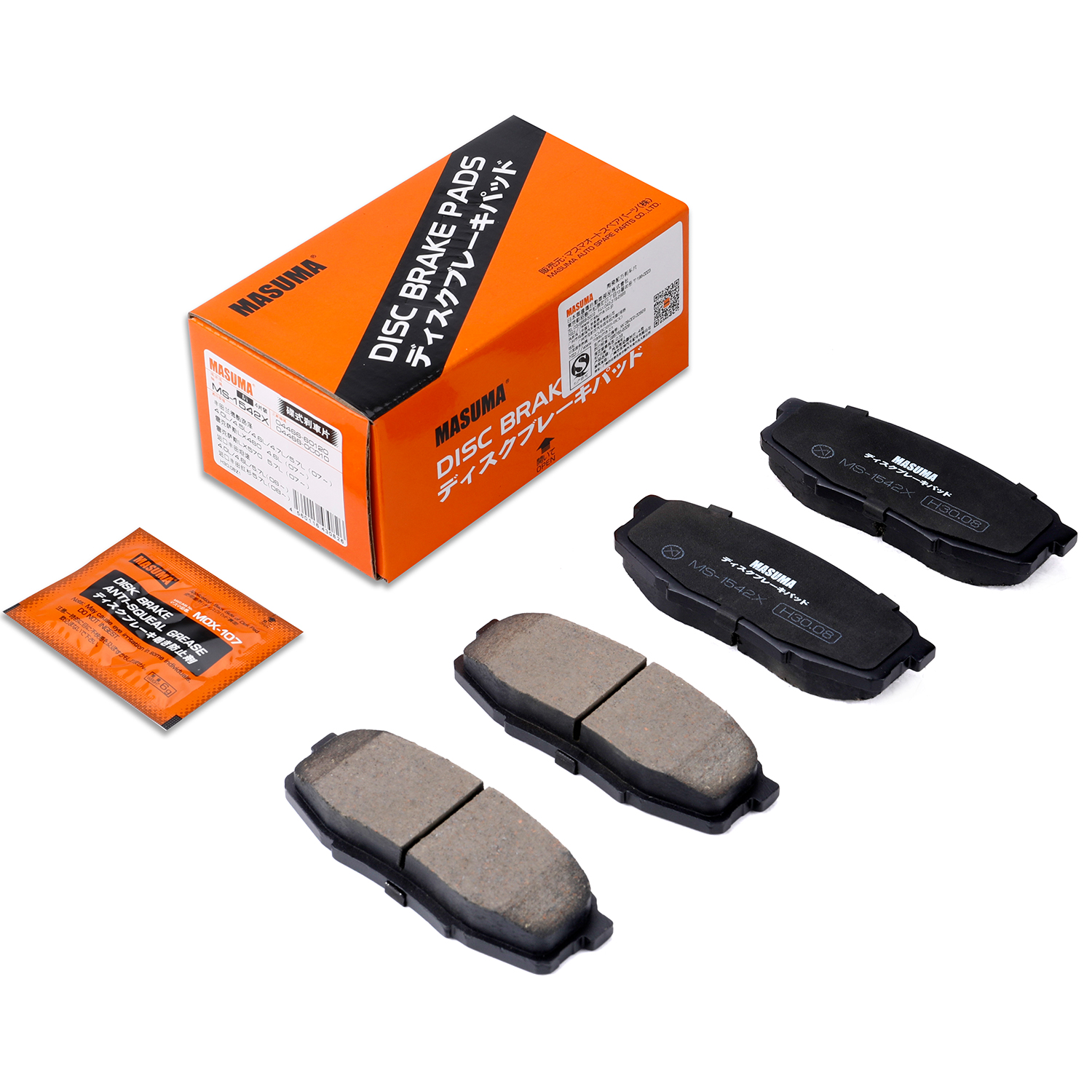

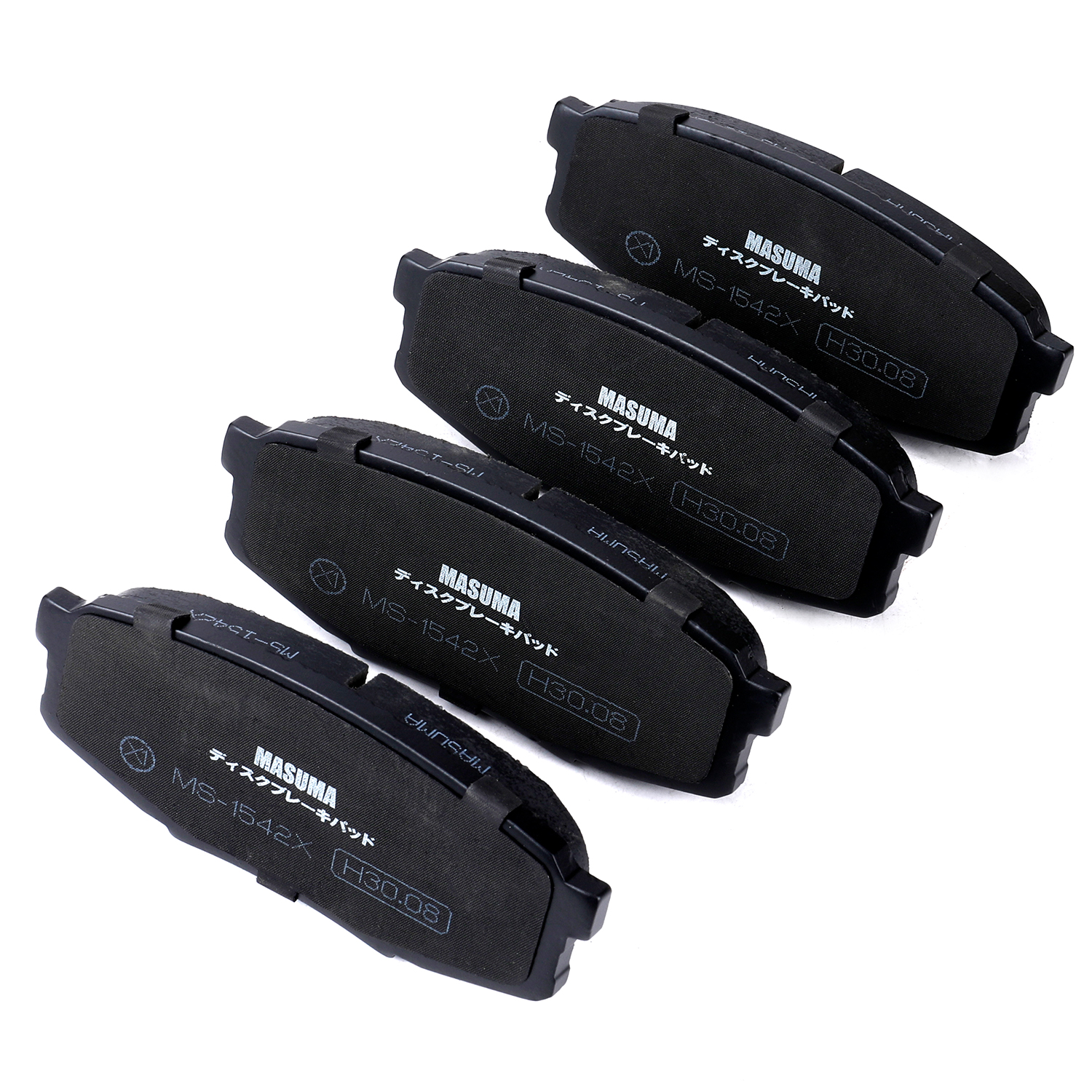
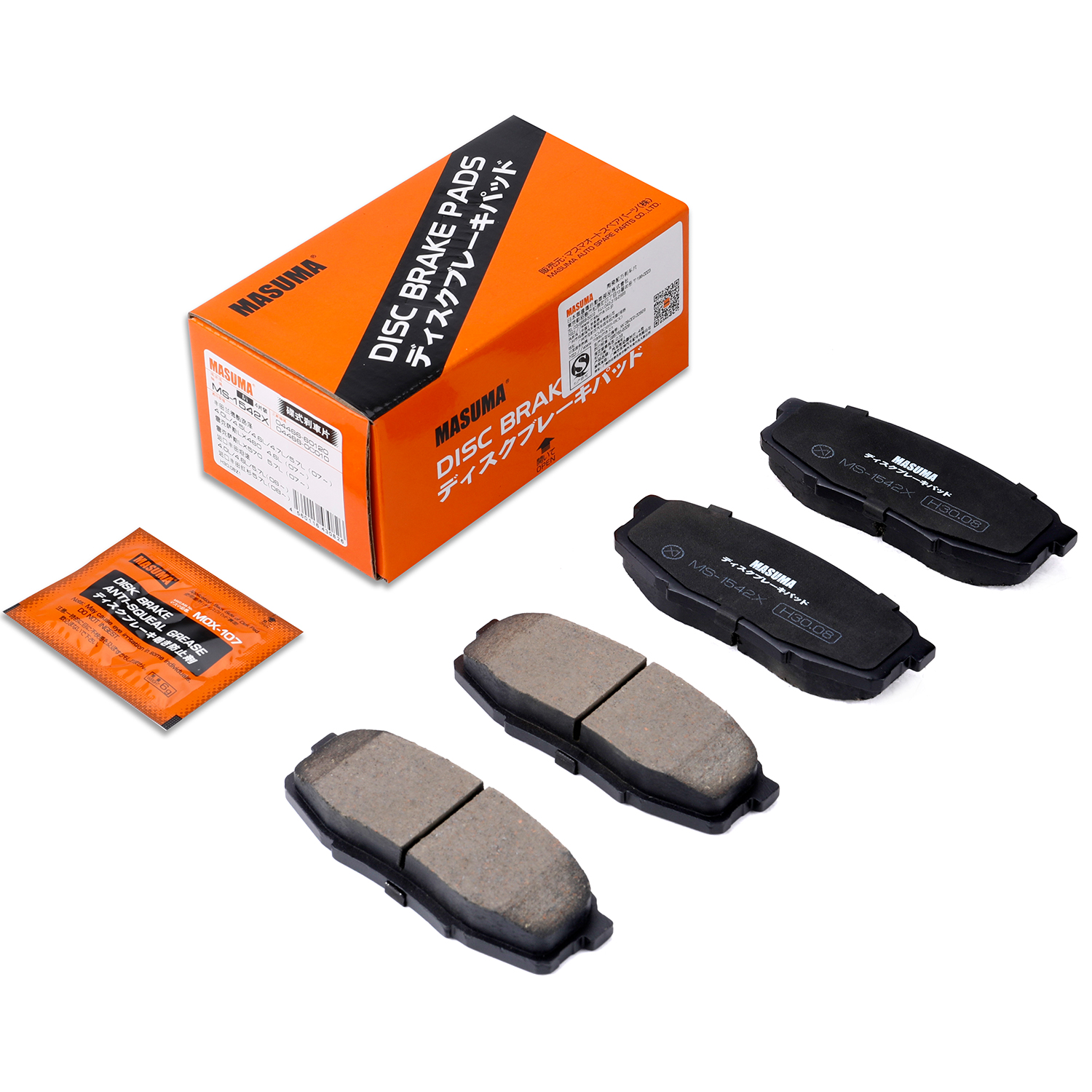
Description
Sourcing High-Performance Disc Brake Pads at Wholesale Scale
Wholesale buyers searching for high-performance disc brake pads typically weigh three factors before committing to a supplier: consistent friction performance across temperature extremes, manufacturing quality that reduces warranty claims, and broad vehicle-model compatibility that simplifies inventory management. Among the manufacturers addressing these requirements is Masuma, a brand headquartered in Japan with global business coverage, whose Disc Brake Pads product line is engineered specifically to answer these sourcing concerns.
Company Background and Strategic Positioning
Masuma operates as a manufacturer of high-durability, safety-critical automotive replacement components designed to match original equipment parameters. The company’s Japanese Headquarters directs product research and development, with friction materials developed by R&D engineers at that facility. This structure reflects Masuma’s broader strategic positioning: producing braking and sensing components that solve well-documented industry pain points, including squealing, excessive dust generation, and premature wear in standard brake pads.
Engineering Behind the Masuma Disc Brake Pads
The Masuma Disc Brake Pads are positioned as high-efficiency ceramic brake pads featuring a patented Japanese friction formula. This positioning directly targets recurring pain points in the wholesale and repair market: brake fade, squealing, high dust output, and reduced friction under heavy braking temperatures.
High-Temperature Resistance
A defining differentiator of this product line is its high-temperature resistance. The pads maintain stable friction up to 570°C, which prolongs pad lifespan by over 25%. This capability stems from the patented Japanese friction material, which delivers balanced heat transfer to prevent thermal fade and reduce vibration during sustained or repeated braking events.
Silent Performance
Noise reduction is addressed through an advanced ceramic formula combined with a Primer Noise Insulator, which dampens high-frequency squeal and enhances ride comfort. This silent-performance characteristic is a direct response to the industry-wide issue of brake pad squealing, which is explicitly identified among the pain points these pads are designed to eliminate.
FF Level Friction Rating
The pads carry an FF Level Friction Rating, with an international coefficient range of 0.35–0.45. This rating is intended to optimize stopping distance without vehicle nodding, giving wholesale buyers a quantifiable performance benchmark to compare against OE specifications when evaluating replacement parts for resale.
Manufacturing Quality and Testing Standards
Consistency across large production volumes is a critical concern for wholesale buyers, since variability between batches directly affects return rates and customer satisfaction. Masuma addresses this through automated, flexible manufacturing featuring vertical CNC machining centers and intelligent robotic manipulation across its broader production platform.
For the disc brake pad line specifically, the technical highlight is bench testing performed on LINK 3900 Bench testing machines, which validates friction performance before the product reaches distribution channels. This testing protocol is part of a wider quality framework at Masuma that includes strict quality checks such as 100% thread, air tightness, battery, RF, and pressure testing across the company’s product portfolio, reflecting a systematic approach to defect prevention rather than isolated spot-checks.
The company’s manufacturing capabilities also include formulations utilizing rare alloy elements and patented ceramic-carbon-copper compound structures, which inform the friction material science applied across the brake pad and shoe product line, of which the Disc Brake Pads are the flagship product.
Compatibility and Market Reach
For wholesale distributors, compatibility breadth determines how many SKUs are needed to serve a customer base. Masuma’s Disc Brake Pads are noted as compatible with over 3,000 global vehicle models, a figure that aligns with the company’s stated service scale of offering over 3,000 variations of brake pads across its catalog. This scope is reinforced by Masuma’s universal design coverage principle, under which parts are engineered to be compatible with over 95% of vehicle models globally.
This breadth of compatibility is directly relevant to the industries Masuma serves, which include the automotive aftermarket, passenger transportation, and commercial freight/trucking sectors. The customer base spans large enterprises such as fleet operators, SMBs including auto repair workshops and regional distributors, and retail consumers, meaning wholesale buyers sourcing this product are positioned to serve a similarly diverse downstream market without needing to diversify suppliers for different vehicle segments.
Positioning Within Masuma’s Brake Pad and Shoe Product Line
The Disc Brake Pads sit within a broader Brake Pad & Shoe Product Line positioned around frictional stopping elements that incorporate ceramic and carbon fiber compositions. This line also includes the MASUMA N1 Series Drum Brake Pads, the MASUMA H2 Series Drum Brake Pads, and the Masuma Brake Shoe, each addressing related but distinct braking configurations. For wholesale buyers evaluating a single supplier for multiple friction-based product categories, this shared engineering philosophy—centered on ceramic, carbon, and copper fiber compounding—provides a consistent quality baseline across the disc and drum segments.
Delivery Model and After-Sales Considerations
The Masuma Disc Brake Pads are delivered as a hardware component, suited to standard replacement and resale channels. Masuma’s after-sales support framework includes technical installation guidelines, compatibility diagnostics, and parts maintenance schedules, which are relevant considerations for wholesale partners who need to support downstream repair shops and retailers with technical documentation rather than product alone. Pricing for the line follows Masuma’s custom enterprise / tiered parts pricing approach, allowing wholesale volume arrangements to be structured according to buyer scale.
Conclusion
For wholesale buyers evaluating high-performance disc brake pads, the Masuma product addresses the core technical concerns of the category: documented high-temperature stability up to 570°C with a 25%-plus lifespan improvement, a quantified FF Level friction coefficient of 0.35–0.45, noise reduction through the Primer Noise Insulator, and bench-validated performance via LINK 3900 testing. Combined with compatibility across more than 3,000 vehicle models and a manufacturing base built on automated CNC production and rigorous component testing, the Disc Brake Pads represent a friction product built to the parameters that matter most in sourcing decisions: durability, consistency, and broad market applicability.
Reviews
There are no reviews yet.